

The total amount of Bitcoin across all crypto exchanges has declined to 1.72 million, signalling a possible supply shock to investors.
On February 26, 2024, there were 1.9 million BTC on exchanges, and for the past 45 days, the share has decreased by 9.47%.
With a decreasing amount of BTC on exchanges and Bitcoin halving rapidly approaching, the current market could be undergoing a significant change.
Bitcoin’s capped availability at 21 million coins and deflationary halving events create a unique economic concept.
As more users enter the market and demand increases, the available supply on exchanges becomes a critical factor in price determination.
The trend of decreasing exchange balances suggests that fewer Bitcoins are available for trading, which could lead to a supply squeeze.
While many regard Bitcoin as a store of value and the first cryptocurrency, others have no regard for it.
The main point of agitation is that Bitcoin is a slow network that can’t scale to accommodate the large population of off-chain investors yet to be onboarded onto the blockchain.
Bitcoin permabulls fully embrace this development in the BTC market supply, while critics brush it off as an irrelevant metric.
Potential Market Reaction to An Actual Bitcoin Supply Shock
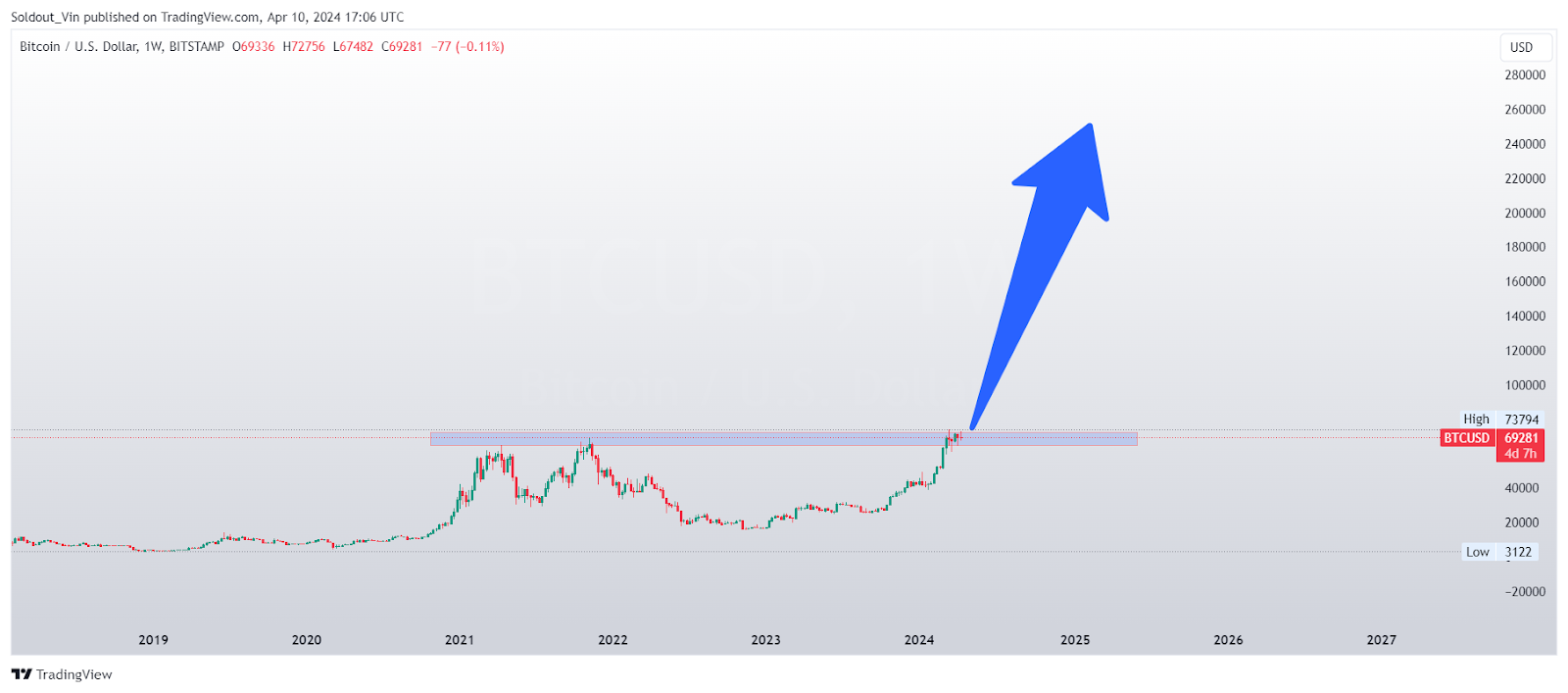
If a supply shock materializes, we could witness various market reactions. The reduced liquidity could drive prices up steeply, and we could witness a $250,000 Bitcoin price in less than six months.
It could also lead to increased market stability as the influence of short-term traders diminishes and the market becomes more driven by long-term investment strategies.
Investors may want to reassess their strategies due to a potential supply shock. Those looking to acquire Bitcoin might face higher entry costs, making it crucial to evaluate the timing of their investments.
Conversely, existing holders might benefit from price appreciation but should remain vigilant about market dynamics and potential regulatory changes.